Total Road Control (TRC)
Zero False Positives in Vehicle Detection. LiDAR + AI Speed Enforcement and Traffic Analytics.
Overview
Total Road Control (TRC) is a LiDAR-based traffic AI system engineered to deliver ZERO FALSE POSITIVES in vehicle detection, speed enforcement, license-plate recognition, and road-flow analytics. Global road traffic fatalities have climbed to 1.35 million annually with 50 million more injured each year — and the difference between a system that prevents these and one that doesn't is detection accuracy. TRC fuses 3D LiDAR sensing with cameras and AI classification, so vehicles are identified with surgical precision in every weather and lighting condition: no missed speeders, no wrongly issued tickets, no false counts. Dubai Silicon Oasis certified TRC with "the absence of false positives and outstanding performance"; the United Arab Emirates University confirmed the same after a parallel deployment. Acting as a stationary 24/7 "virtual officer," TRC keeps roads safer even when no physical officer is present.
Core Features
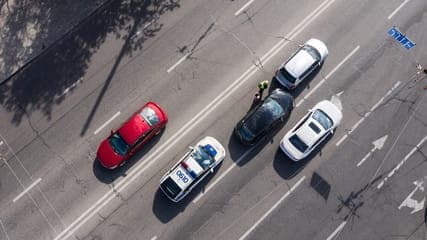
3D Perception & Precise Monitoring
Horus TRC utilizes high-end machine learning and 3D perception algorithms to maintain total awareness of its surroundings.
- Point Cloud Analysis: The system scans its entire field of view, analyzing 3D data to track vehicle movement with surgical precision.
- Automated Speed Tracking: Uses AI to measure the speed of every vehicle in the vicinity simultaneously.
- Plate Recognition: Every violation is captured with a high-definition image of the vehicle and a clear view of its license plate, which is then sent instantly to a management dashboard.
Advanced Distraction Detection (DDD)
Beyond speed, the TRC system is equipped to identify complex human behaviors that lead to accidents.
- Behavioral Classification: The system detects and tracks specific distractions such as texting, cell phone use, or other dangerous lapses in focus.
- Edge-to-Cloud Intelligence: High-resolution feeds are processed locally to identify violations in real-time. Once a risk is detected, the data is transmitted to a central Big Data server for deep analysis.
- Actionable Insights: By handling massive data streams from multiple units, the server provides authorities with real-time intelligence to improve long-term community road safety.